
Supporting your building’s health supports everyone inside it.
Management Companies and Landlords
Protect Your Portfolio with Documentation You Can Defend
Managing a building means answering to tenants, owners, and regulators at the same time—often over conditions hidden inside walls, ductwork, and shared systems. A single mold complaint, lead obligation, or air-quality issue can escalate quickly into violations, liability, and costly emergency response if it isn't identified and documented early.
The challenge is rarely a shortage of contractors willing to sell you a fix; it's getting an objective assessment of what the problem actually is before money and decisions are committed. Across a portfolio, that clarity is the difference between targeted action and chasing symptoms unit by unit.
As an independent, inspection-only firm, we give you exactly that: precise diagnostics, regulatory documentation that stands up to scrutiny, and protocols your contractors can execute against. Because we have no stake in remediation, our reports carry weight with agencies, ownership, and tenants alike—and help you stay ahead of problems rather than react to them.

Mold
Across a portfolio, mold surfaces with little warning and can escalate into health complaints, violations, and liability if it isn't handled correctly. Our licensed inspectors identify the moisture sources driving the growth, then deliver a detailed report and, where warranted, a protocol/scope of work your remediation contractor can execute against. We also perform Post Remediation Verifications (PRVs) to confirm the work was completed properly. Because we inspect only and never remediate, every finding is unbiased and free of conflict.
Moisture Intrusion
In multi-unit buildings, water rarely stays where it enters—it travels between units, assemblies, and floors before its source is ever identified. Using infrared cameras and moisture meters, we read behind tile, walls, and other concealed surfaces to trace intrusion back to its origin. Locating the true source early lets you direct repairs precisely instead of chasing symptoms across the building.


Lead
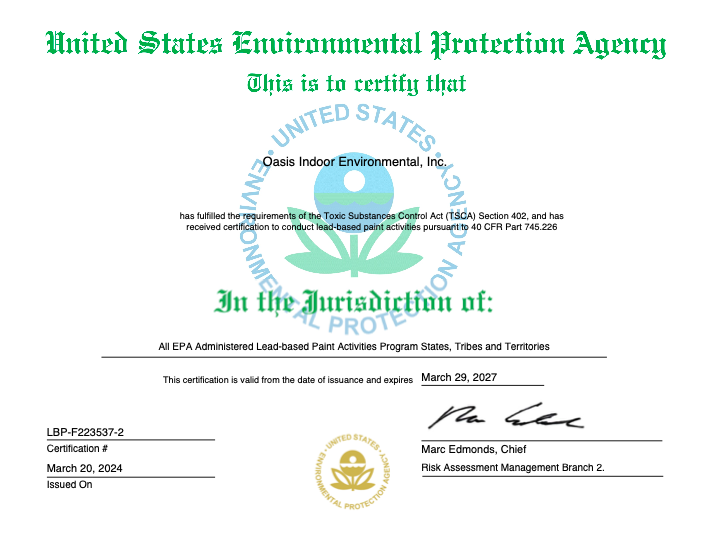
Buildings constructed before the lead-paint ban carry ongoing testing and disclosure obligations that fall to the manager. As an independent EPA-certified lead inspector, we test paint, water, and soil using either a Lead Hazard Analysis or XRF equipment calibrated to the current mandated threshold, scanning every layer of every painted surface. We handle both large buildings and smaller properties, and our inspectors are licensed for clearance testing to close out abatement work.
Asbestos
Older building stock commonly contains asbestos in insulation, flooring, and pipe materials that must be identified before any renovation, repair, or demolition disturbs them. Have suspect materials you want tested, or concerns that a prior abatement was done poorly? We sample and analyze them so you know precisely what you're dealing with before crews go in.


Allergens
Allergens accumulating in units and common areas drive tenant complaints and affect occupant comfort across an entire property. As part of an air-quality assessment, we identify which allergens are present and where concentrations are highest. That data lets you respond where it matters rather than treating the building blindly.
VOCs
Volatile organic compounds off-gas from finishes, furnishings, adhesives, and cleaning products, and they build up quickly in occupied or recently renovated spaces. We measure levels throughout the relevant areas and trace them to their source to determine whether anything exceeds a reasonable range. The numbers come straight from our instruments, giving you a factual basis to act on.


Odor Intrusion
Odors that migrate through shared walls, plumbing chases, and ductwork are among the most persistent—and hardest to source—complaints a manager fields. We inspect to pinpoint where the odor originates and how it's traveling, then identify ways to stop it at the path. Our neutral documentation gives you a credible account to bring back to tenants and ownership.
Compliance
Managing property in this market means staying ahead of overlapping environmental requirements—including NYC mechanisms like Local Law 55, Local Law 31, and HPD violation clearance, alongside applicable New Jersey and county rules. We provide the independent testing and documentation these obligations require, and we can assist directly with clearance testing tied to a violation. Because our reports come from a third party with no stake in the outcome, they carry weight with agencies, owners, and tenants alike.


Drinking Water Quality
Aging plumbing and the municipal supply can both compromise water quality in a multi-unit building, often with no visible sign at the tap. We test for lead, bacteria, and other contaminants so you can address an issue before it becomes a complaint or a violation. You receive clear, documented results you can stand behind.
Silica
Renovation, demolition, and maintenance work can generate respirable crystalline silica—a fine dust that poses a serious health risk to occupants and workers alike. We test to determine whether airborne silica is present and at what concentration. Our objective findings help you manage exposure and meet your safety obligations during active work.


Tobacco & Marijuana Smoke
Smoke drifting between units is a fast-growing source of complaints and is notoriously difficult to substantiate. We test the indoor air to detect and document the presence of tobacco or marijuana smoke. That impartial verification gives you the evidence to enforce building policies and lease terms consistently.
Construction Byproducts
Build-outs and renovations release dust, fumes, and airborne contaminants that can reach neighboring occupied units and trigger tenant pushback. Beyond testing for these byproducts, we provide a dust mitigation service—setting up and monitoring a containment system for the full duration of a construction project. That oversight protects surrounding tenants and gives both you and ownership documented peace of mind.