
Mold Inspection and Environmental Testing in Westchester County, NY
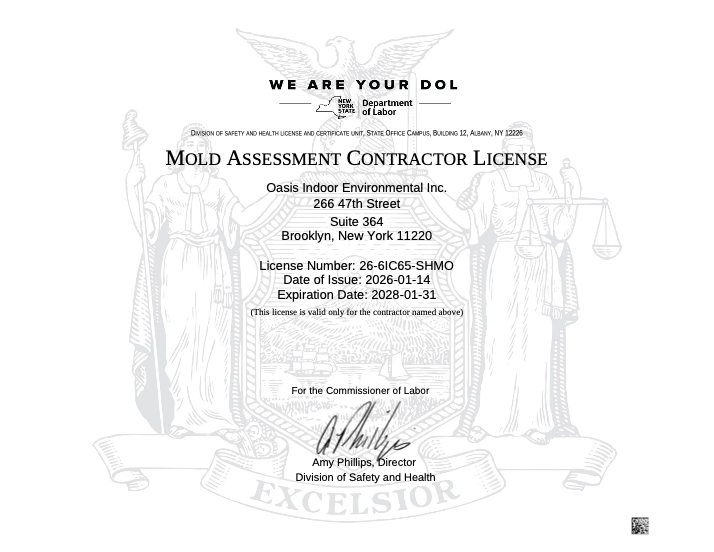
Westchester homeowners and property managers deal with some of the most variable housing stock in the metro area — century-old colonials in Yonkers, mid-century ranch homes in White Plains, river-facing properties in Tarrytown, and everything in between. Age, humidity, and proximity to water create real conditions for mold, lead paint, and air quality problems. Oasis Indoor Environmental has been serving Westchester County since 2005, providing independent inspections with no remediation work and no financial stake in the outcome.
Why Independent Inspection Matters in Westchester
When a contractor tells you there's a problem, they're also the one selling you the fix. In New York State, mold assessors and remediators are legally required to be separate entities — and that separation exists for good reason. Oasis operates exclusively as an assessor. We inspect, we test, we report. We never remediate. That means every finding we deliver reflects what's actually in your home, not what justifies a work order.
For Westchester residents navigating a real estate transaction, a landlord dispute, or a health concern that won't resolve, that independence is the difference between a trustworthy answer and a sales pitch.
Inspection and Testing Services Available in Westchester County
We bring the full range of Oasis services to Westchester County. Whether you're dealing with a visible mold problem, a musty odor with no obvious source, a lead paint concern in an older home, or a regulatory deadline tied to a rental property, we can conduct the appropriate inspection and deliver a written report that documents exactly what we found and what the data supports.
Environmental Conditions Specific to Westchester County
Westchester sits in a humid continental climate zone, with warm, wet summers and cold winters that drive repeated freeze-thaw cycles in older building envelopes. The county's housing stock skews old — a significant portion of residential buildings predate 1978, which means lead paint is a routine concern in addition to mold. Properties near the Hudson River, the Bronx River watershed, and low-lying areas in communities like Mount Vernon and Port Chester carry elevated moisture risk year-round.
Finished basements are common in Westchester, and they are among the most frequent sources of mold calls we receive. Sump pump failures, inadequate vapor barriers, and HVAC condensation all create conditions where mold can establish behind drywall or under flooring without any visible sign at the surface. Air sampling is often the only reliable way to confirm what's happening in a finished space.
Mold Inspection and Testing
Mold investigations in Westchester typically begin with a visual assessment and moisture mapping to identify conditions that support mold growth. Where mold is suspected but not visible, we collect air samples and surface samples that are analyzed by an accredited third-party laboratory. Results are returned in a written report that identifies the species present, the concentration levels, and the likely source — giving you a documented baseline before any remediation decisions are made.
Post-Remediation Verification
After a remediation contractor completes work, an independent clearance inspection confirms the job was done correctly. We conduct post-remediation verification using the same air and surface sampling protocols used in the initial assessment, comparing results against established clearance standards. A passing clearance report from an independent assessor is the only way to know the work is genuinely complete — not just visually finished.
Lead Inspection and XRF Testing
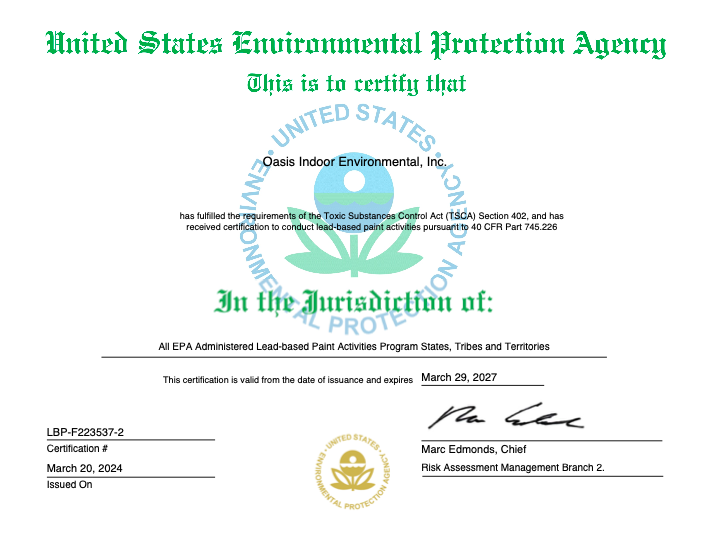
A large share of Westchester's residential inventory was built before lead paint was banned in 1978. We conduct lead inspections using XRF (X-ray fluorescence) technology, which identifies lead-containing paint on surfaces throughout a property without requiring destructive sampling. For landlords with children under six in residence, we also conduct Lead Hazard and Risk Assessments that meet New York State requirements for identifying and prioritizing hazardous conditions.
Indoor Air Quality and Odor Investigation
Persistent odors, unexplained health symptoms, and post-renovation air quality concerns are among the most common reasons Westchester residents call us outside of a visible mold situation. We investigate VOCs, formaldehyde off-gassing, sewer gas intrusion, and other indoor air quality conditions using direct-read instruments and laboratory analysis. If something in your home doesn't smell right and no one can tell you why, a systematic air quality investigation is the appropriate starting point.
Communities We Serve in Westchester County
Oasis serves the full county, including White Plains, Yonkers, New Rochelle, Mount Vernon, Tarrytown, Scarsdale, Ossining, Peekskill, Port Chester, Mamaroneck, Larchmont, Bronxville, Ardsley, Dobbs Ferry, Hastings-on-Hudson, Irvington, Pleasantville, Rye, Harrison, and surrounding communities. We also serve clients in neighboring Bergen County NJ and throughout the five boroughs of New York City.
Frequently Asked Questions About Environmental Inspections in Westchester
How long does a mold inspection take in a typical Westchester home?
Most residential mold inspections take between one and three hours, depending on the size of the property and the number of areas of concern. Air and surface samples are sent to an accredited laboratory, and written results are typically returned within two to five business days. We walk you through the findings directly — not through a summary email.Do I need a mold inspection before buying a home in Westchester County?
A standard home inspection does not include mold testing. If the property has a musty odor, visible staining, a history of water intrusion, or a finished basement, a separate mold inspection is worth conducting before closing. It gives you documented information about current conditions — and, if a problem exists, leverage to negotiate before the transaction is final.Is lead paint testing required for Westchester rental properties?
New York State law requires landlords to disclose known lead paint hazards in pre-1978 housing. In Westchester municipalities that have adopted Local Law 31 or similar ordinances, additional testing and remediation obligations may apply — particularly when children under six reside in the unit. A lead inspection establishes the documented condition of painted surfaces and supports compliance with applicable local requirements.What's the difference between a mold inspection and a mold test?
A mold inspection is a comprehensive assessment: visual examination, moisture mapping, identification of conditions that support mold growth, and a determination of where sampling is warranted. A mold test refers specifically to the laboratory analysis of air or surface samples. A thorough investigation includes both — sampling without the contextual inspection can produce results that are difficult to interpret accurately.