
Mold Inspection and Environmental Testing in Queens, NY
Queens is one of the most environmentally diverse boroughs in New York City — and its housing stock reflects that complexity. Older attached homes, multi-family apartment buildings, basement apartments, and aging mechanical systems create conditions where mold, lead, and indoor air quality problems develop quietly and persist. Oasis Indoor Environmental has been serving Queens residents, tenants, and property managers for nearly 20 years, providing independent inspections with no remediation work and no financial reason to find more than what's actually there.
Why Queens Properties Are Prone to Indoor Environmental Problems
The housing in Queens spans nearly every era of New York construction — from pre-war brick attached homes in Jackson Heights and Flushing to postwar garden apartments in Forest Hills and newer construction in Long Island City. Across all of it, the common thread is density and age. Older buildings carry decades of moisture intrusion, original plaster walls, and lead paint in layers beneath modern finishes. Basement and garden-level units — common throughout the borough — sit closer to groundwater and are among the first places mold takes hold after a plumbing leak or a wet season.
Queens also has a significant number of multi-family properties where tenants and landlords are in disagreement about who is responsible for a problem and whether one actually exists. An independent mold inspection from a licensed assessor who has no stake in the remediation outcome is often the only way to get a credible answer both sides can rely on.
What Each Service Covers
Queens homeowners, tenants, and property managers call us for a range of concerns. Here is what each inspection type addresses.
Environmental Testing Services We Provide in Queens
Oasis Indoor Environmental offers the full range of inspection and testing services across Queens. Every engagement is assessment only — we do not perform remediation, which means our findings are never influenced by what a contractor might earn from the work that follows.
Mold Inspection and Testing
A mold inspection begins with a visual assessment and moisture mapping of the property — identifying areas of elevated humidity, water damage, or conditions that support mold growth even when visible growth isn't yet present. Where warranted, we collect air samples and surface samples for laboratory analysis. Results are reviewed with you directly, and every report is written to a documentation standard that holds up in disputes, insurance claims, and legal proceedings.
- Air sampling to establish baseline and comparison spore counts
- Surface sampling for visible growth or staining
- Moisture mapping to locate hidden water intrusion
- Post-remediation verification (PRV) after mold work is completed
Lead Inspection and XRF Testing
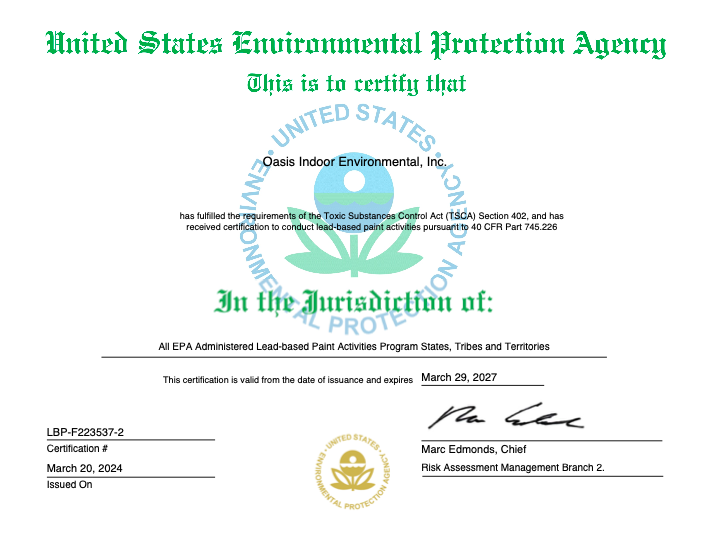
Queens has a large inventory of pre-1978 housing, and lead paint remains a serious concern — particularly for families with young children. Our EPA-certified lead inspectors use XRF technology to test painted surfaces without destructive sampling, identifying the presence and condition of lead paint throughout a property. We also conduct Lead Hazard and Risk Assessments and provide clearance testing after lead abatement work is completed. For landlords managing properties with children under six, Local Law 31 compliance inspections are available.
Indoor Air Quality and Odor Investigation
Persistent odors, unexplained health symptoms, and concerns about off-gassing from new materials or renovations are among the most common reasons Queens residents contact us. We investigate VOCs, formaldehyde, sewer gas, and other airborne contaminants using calibrated instrumentation and laboratory analysis. If you've had a fire or smoke event in your unit or building, post-fire testing can document what's in the air and on surfaces before you return to the space.
Asbestos Inspection
Asbestos-containing materials are common in Queens buildings constructed before 1980 — floor tiles, pipe insulation, ceiling texture, and joint compound are among the most frequent sources. Before any renovation or demolition work, an asbestos inspection and sampling is often required by the contractor and may be required by the city. We collect samples for laboratory analysis and provide documentation suitable for contractor use and permit compliance.
Who We Work With in Queens
Our Queens clients include a broad cross-section of the borough's residents and property professionals.
- Homeowners who have found visible mold, noticed a persistent smell, or received a health concern from a physician and want an objective assessment before committing to remediation costs
- Tenants in rental apartments who need independent documentation of a mold or lead condition — separate from any vendor their landlord may have hired
- Landlords and property managers responding to HPD violations, preparing for Local Law 31 lead inspections, or managing annual Local Law 55 allergen inspection requirements
- Buyers and sellers in real estate transactions where an environmental issue has been flagged or where due diligence requires independent verification
- Expecting parents who want confirmation that their home is safe before a baby arrives — a concern we hear from Queens families regularly
Common Questions About Mold Inspection in Queens
How do I know if I need a mold inspection or just a mold test?
A mold test alone — air or surface sampling without a full inspection — can produce results that are difficult to interpret without context. A mold inspection includes a visual assessment, moisture mapping, and sampling where indicated, so you understand not just whether mold is present but where it's coming from and how significant the problem is. For most Queens homeowners and tenants, a full inspection is the more useful and cost-effective starting point.Can I use your inspection report in a dispute with my landlord or in court?
Yes. Our reports are written to a documentation standard that holds up in tenant-landlord disputes, HPD proceedings, and legal contexts. We are an inspection-only firm with no remediation work — which means we have no financial interest in the outcome, and that independence matters when a report needs to be credible to a third party.How long does a mold inspection take in a typical Queens apartment or home?
Most residential inspections in Queens take between one and three hours depending on the size of the unit and the complexity of the concern. A single apartment with a localized moisture issue will typically be faster than a full multi-family building or a whole-house inspection with multiple areas of concern. We will give you a time estimate when you schedule.Do you serve all neighborhoods in Queens?
Yes. We serve all Queens neighborhoods, including Flushing, Jackson Heights, Astoria, Forest Hills, Jamaica, Long Island City, Bayside, Ridgewood, Woodside, and surrounding areas. Queens is part of our core NYC service area, and we schedule inspections throughout the borough regularly.