
Something Smells Wrong — We Find Out What It Is and Where It's Coming From
You noticed a chemical odor, a persistent sewer smell, or something you can't quite name. Before you dismiss it or spend money on remediation based on a guess, get an independent VOC and odor investigation from a certified assessor with no financial stake in what we find.
When a Smell Is More Than a Nuisance
Indoor air quality problems are often invisible — and the ones you can smell are the ones your body is already reacting to. Volatile organic compounds, or VOCs, are gases emitted from building materials, finishes, furnishings, and household products. Some are mildly irritating. Others, like formaldehyde, are classified carcinogens. Sewer gas carries hydrogen sulfide, which is acutely toxic at elevated concentrations. The presence of an odor is your building telling you something — and the right response is to find out what, specifically, is in the air.
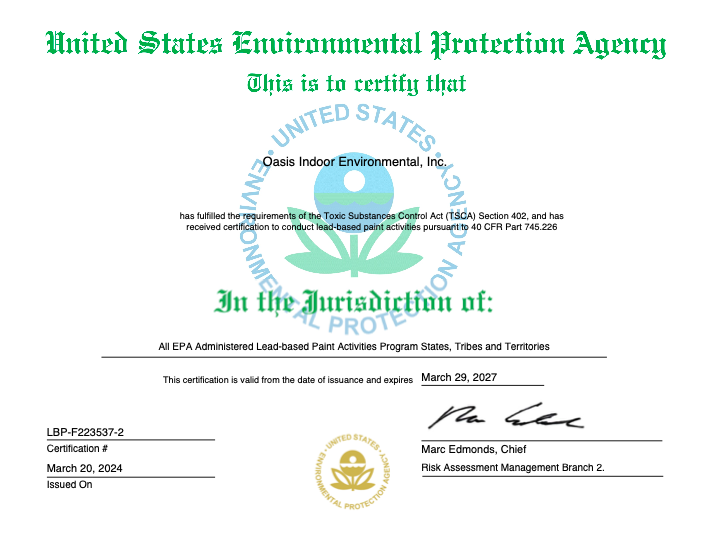
Oasis Indoor Environmental has been conducting odor investigations and VOC testing across the New York metro area since 2005. We identify the source, quantify what's present, and give you a written report that holds up — whether you need it for your own peace of mind, to present to a landlord, or to support a legal claim.
How a VOC and Odor Investigation Works
Every investigation begins with a structured walkthrough. We ask the right questions — when the smell started, where it's strongest, whether it's worse at certain times of day — and use that information to direct the sampling strategy. This is not a checklist exercise. It's a methodical process that narrows the source before we collect a single sample.
What We Test For
VOC and odor investigations are not one-size-fits-all. The testing protocol depends on what you're smelling, where it's occurring, and what's in the building. Common sources we investigate include:
- Formaldehyde and other aldehydes from new construction materials, cabinetry, flooring, and furniture
- Sewer gas infiltration through failed P-traps, cracked drain lines, or improper venting
- Off-gassing from paints, adhesives, sealants, and coatings — especially in recently renovated spaces
- Gas stove emissions and combustion byproducts, including nitrogen dioxide
- VOCs from cleaning products, pesticides, and stored chemicals
- Post-fire and smoke residue compounds (including acrolein and benzene)
- Musty or biological odors that may indicate mold growth without visible surface evidence
We use calibrated air sampling equipment and accredited laboratory analysis to identify and quantify what's present — not just confirm that something is there.
Site Assessment and Source Identification
We begin with a thorough visual and olfactory inspection of the space, reviewing HVAC systems, plumbing access points, building materials, and recent renovation history. This step often reveals the probable source before any laboratory analysis is needed — and it shapes which tests will actually answer your question.
Air Sampling and Laboratory Analysis
Where a specific compound is suspected, we collect targeted air samples using certified equipment and submit them to an accredited third-party laboratory. For formaldehyde testing, we use NIOSH-method sampling. For broader VOC screening, we use TO-15 or TO-17 canister methods that identify dozens of compounds simultaneously. Results are quantified against established health-based standards.
Sewer Gas and Combustion Source Investigation
Sewer gas odors require a different approach — one focused on plumbing system integrity, trap condition, and building pressure dynamics. We use tracer gas methods and pressure diagnostics where appropriate to pinpoint infiltration points. Gas stove and combustion source investigations include carbon monoxide and nitrogen dioxide monitoring in occupied spaces.
Off-Gassing and New Construction Testing
Newly renovated or furnished spaces frequently off-gas at levels that exceed health guidelines, particularly in the first 12 to 24 months after installation. We test for the compounds most commonly associated with new construction — formaldehyde, acetaldehyde, benzene, toluene, and xylene — and compare results to ASHRAE, OEHHA, and EPA reference values.
Who Requests a VOC and Odor Investigation
Odor and VOC complaints come from a wide range of situations. We work with:
- Homeowners who notice a chemical smell after a renovation and want to know whether it's safe to move back in
- Tenants dealing with a recurring sewer gas odor their landlord has failed to resolve — and who need independent documentation of the condition
- Expecting parents concerned about off-gassing from new nursery furniture, paint, or flooring
- Property managers responding to tenant complaints and needing a defensible, third-party assessment before authorizing repairs
- Commercial building managers investigating sick building syndrome complaints or recurring IAQ issues that have not been explained by prior inspections
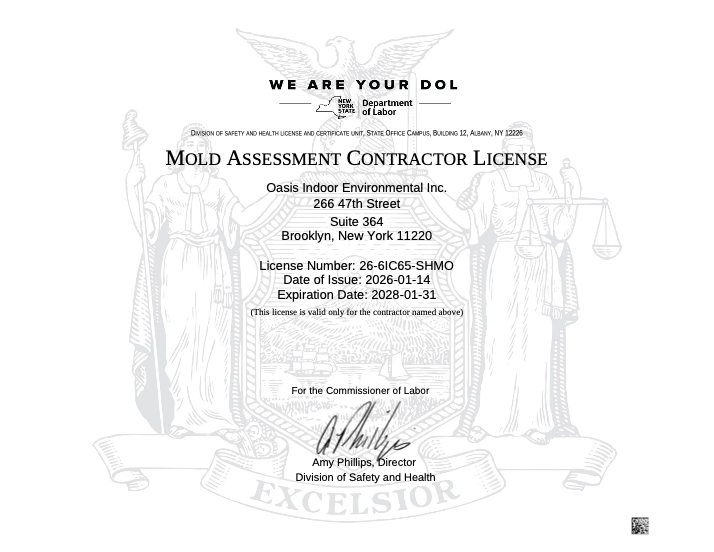
Because Oasis does not perform remediation, our findings are never influenced by what a fix might cost. That independence is not incidental — in New York State, mold assessors and remediators are legally required to be separate entities, and we apply that same separation of interest to every investigation we conduct.
Frequently Asked Questions About VOC and Odor Testing
What is causing a chemical smell in my home?
Chemical odors in residential spaces most often come from VOCs released by building materials, adhesives, paints, sealants, or furnishings — a process called off-gassing. Newly renovated or furnished spaces are the most common source, but older materials can also emit compounds under certain temperature and humidity conditions. An air sampling investigation identifies which compounds are present and at what concentrations, so you're working from data rather than guesswork.Is sewer gas in my apartment dangerous?
Sewer gas is a mixture of gases that includes hydrogen sulfide, ammonia, methane, and carbon dioxide. At low concentrations, the primary concern is the odor itself and potential irritation. At higher concentrations, hydrogen sulfide is acutely toxic and methane is flammable. A persistent sewer gas smell in a living space warrants investigation — both to identify the infiltration point and to assess whether concentrations have reached a level of health concern.What does formaldehyde testing involve?
Formaldehyde testing uses passive or active air sampling methods — typically NIOSH 2016 or equivalent — to collect a time-weighted air sample that is then analyzed at an accredited laboratory. The result is a concentration expressed in parts per million or micrograms per cubic meter, which we compare to OEHHA, EPA, and ASHRAE reference levels. The process is non-invasive and takes place during a standard site visit.How is a VOC test different from a mold test?
A mold air test samples for fungal spores and fragments suspended in the air. A VOC test samples for chemical compounds — gases emitted from materials, products, or biological sources. Some odors that smell biological may actually be VOCs associated with mold metabolism (called microbial VOCs, or MVOCs), and in those cases we may recommend both types of testing. The right protocol depends on what you're experiencing and what we observe during the site assessment.