
Before You Move Back In, Make Sure the Air Is Actually Clear
A fire leaves more than visible damage. Soot particles, char residue, and combustion byproducts settle into surfaces, ductwork, and building materials long after the flames are out — and long after a cleanup crew says the job is done. Oasis Indoor Environmental provides independent post-fire smoke damage testing in NYC so you know what you're actually breathing before you return.
Why Smoke Damage Is Harder to Clear Than It Looks
Visible soot is only part of the problem. Fires produce a complex mixture of fine particulates, volatile organic compounds, polycyclic aromatic hydrocarbons (PAHs), and combustion gases that penetrate porous materials — drywall, insulation, wood framing, HVAC systems — at a molecular level. A surface can look clean and still carry measurable contamination. That's why visual inspection alone is not a reliable basis for a clearance decision.
Smoke damage air quality problems are also not always obvious from smell. Some of the most harmful post-fire residues — including fine particulate matter and certain VOCs — are odorless. If a remediation contractor tells you the job is complete based on how the space looks and smells, that is not the same as a documented, sample-based verification.
When to Call for Post-Fire Testing
Post-fire smoke damage testing is appropriate at several distinct points in the recovery process. Understanding which stage you're in helps determine what type of sampling makes the most sense.
What Post-Fire & Smoke Testing Covers
Oasis conducts post-fire environmental testing as an inspection-only firm — we have no remediation work to sell, which means our findings reflect what the data shows, not what benefits a cleanup contract. Depending on the scope of the fire and the stage of the project, testing may include:
- Air sampling for particulates and combustion byproducts — captures airborne soot, fine PM2.5 particles, and combustion-related compounds that remain suspended after a fire
- Fire residue wipe samples — surface swabs collected from walls, countertops, ductwork registers, and other contact surfaces to measure soot and char deposition
- VOC and formaldehyde screening — fires involving synthetic materials, adhesives, and treated wood can release elevated VOCs; we test for off-gassing that persists after visible cleanup
- Post-cleanup verification sampling — structured clearance testing conducted after remediation is complete to confirm the space meets acceptable thresholds before reoccupancy
- HVAC and ductwork assessment — smoke travels through air handling systems; we evaluate whether duct contamination may be redistributing residue after the source area is cleaned
- Odor source investigation — when a persistent smoke odor remains after remediation, sampling helps identify whether the source is surface residue, embedded material, or an HVAC issue
Before Remediation Begins
Pre-remediation baseline sampling documents the extent and distribution of contamination before any cleanup work begins. This establishes a factual record of conditions — useful for insurance claims, property damage disputes, and ensuring the remediation scope is sized correctly. If a contractor is proposing a partial cleanup, baseline data tells you whether that scope is defensible.
After Remediation Is Complete
Post-cleanup verification is the most common reason clients contact us after a fire. A remediation contractor may issue their own clearance, but that assessment comes from the same party with a financial interest in the job being complete. Independent post-remediation verification sampling — air samples, wipe samples, and where applicable VOC screening — provides a third-party confirmation that is not tied to anyone's cleanup contract. In New York State, mold assessors and remediators are legally required to be separate entities; the same logic of independence applies to fire damage clearance.
When a Persistent Odor Won't Clear
A smoke smell that lingers weeks after remediation is a common and frustrating problem. It usually means residue remains somewhere that wasn't fully addressed — embedded in porous materials, inside ductwork, or in areas the cleanup didn't reach. We conduct targeted odor investigations to identify the source through sampling rather than guesswork, giving you and your contractor a specific location and material to address rather than a second round of generalized treatment.
For Insurance Documentation
Insurance adjusters and property damage attorneys work from documented evidence, not contractor estimates or visual assessments. A laboratory-backed sampling report from a licensed, credentialed inspector carries weight that a remediation company's self-issued clearance does not. Oasis reports are written to a standard that holds up under scrutiny — specific sampling methodology, chain-of-custody documentation, accredited laboratory analysis, and findings stated in plain language that a claims professional can act on.
Nearly 20 Years of Environmental Testing in the NY Metro Area
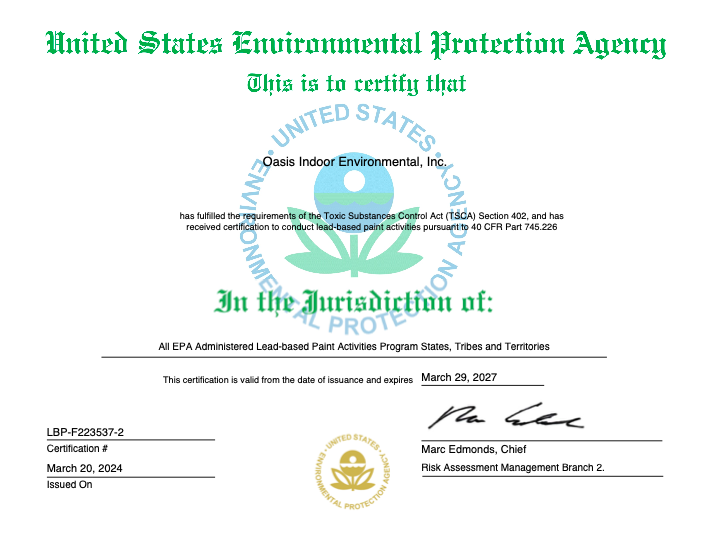
Oasis Indoor Environmental has been serving New York City and the surrounding region since 2005. Our inspectors hold EPA certifications, NYS licensure, and CIEC and CMC credentials. We are IAQA members and carry HomeAdvisor Top Rated and Elite designations earned over more than a decade of client work. Every inspection is conducted by a qualified professional — not a subcontractor — and every report is reviewed for accuracy and completeness before it leaves our office.
We serve all five boroughs of New York City, Westchester County, Bergen County, and surrounding areas across the NY–NJ metro region. Post-fire testing is available for residential properties, multi-family buildings, and commercial spaces.
Common Questions About Post-Fire Smoke Testing
Is it safe to move back into a home or apartment after a fire and cleanup?
Not necessarily, based on appearance alone. Soot and combustion byproducts can remain in surfaces, ductwork, and building materials even after visible cleanup is complete. The only reliable way to confirm a space is safe for reoccupancy is through air sampling and surface wipe testing interpreted against established clearance thresholds. A space that looks and smells clean may still carry measurable contamination.How do I test for smoke and soot residue after a fire?
Soot and char residue is measured through wipe samples — surface swabs collected from walls, ceilings, ductwork registers, and other areas and analyzed by an accredited laboratory. Airborne combustion byproducts are captured through air sampling. A qualified environmental inspector collects both types of samples, submits them to a laboratory, and interprets the results against clearance benchmarks. This is not a DIY process — chain-of-custody documentation and proper sampling methodology are required for the results to be defensible.Can a remediation company clear their own work after a fire?
A remediation company can issue their own clearance, but that assessment comes from the same party that performed the cleanup — creating an inherent conflict of interest. Independent post-cleanup verification by a separate, inspection-only firm provides confirmation that is not tied to the remediation contract. In New York State, the legal separation required between mold assessors and remediators reflects exactly this principle. For fire damage clearance, the same standard of independence should apply.What does a post-fire smoke damage testing report include?
An Oasis post-fire testing report documents sampling locations, methodology, chain-of-custody information, accredited laboratory results, and a plain-language interpretation of findings relative to applicable clearance standards. Reports are written to a litigation-ready standard — specific, documented, and defensible — making them suitable for insurance claims, property damage disputes, and reoccupancy decisions.