
NYC Local Law 31 Lead Paint Compliance Inspections
Local Law 31 sets binding XRF inspection deadlines for older NYC buildings — and the penalties for missing them fall squarely on landlords and property owners. Oasis Indoor Environmental has helped property owners across all five boroughs meet their LL31 obligations with certified inspections, clear documentation, and reports built to satisfy HPD scrutiny.
What Local Law 31 Actually Requires
Local Law 31 amended New York City's lead paint law to mandate proactive XRF lead paint inspections in residential buildings constructed before 1960 — and in pre-1978 buildings where a child under six resides. The law establishes inspection deadlines by borough and building, requires that inspections be conducted by an EPA-certified lead inspector using XRF technology, and mandates that findings be reported to HPD. Owners who fail to meet their deadline face escalating fines and potential violations that follow the property.
The law is not self-reporting. Compliance requires a documented inspection by a qualified professional — not a visual assessment, not a landlord's own records, and not a prior inspection that predates the LL31 cycle.
What the Inspection Covers
Local Law 31 compliance inspections are more structured than a standard lead assessment. Here is what the process involves and what each component is designed to accomplish.
Who Needs an LL31 Inspection
Local Law 31 applies to a specific class of NYC residential properties. If your building meets any of the following criteria, you are likely subject to the law's inspection requirements:
- Residential buildings with three or more units built before 1960
- Pre-1978 buildings of any size where a child under six currently lives
- Buildings already cited for lead-related HPD violations
- Properties changing ownership where prior LL31 documentation cannot be confirmed
If you are unsure whether your building falls under LL31 — or whether a prior inspection satisfies the current compliance cycle — that is a question worth answering before HPD answers it for you.
XRF Testing of All Applicable Surfaces
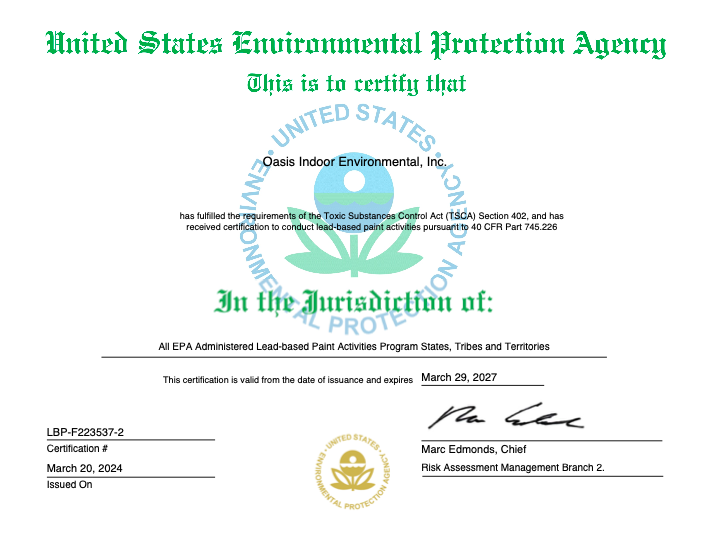
XRF (X-ray fluorescence) technology reads lead concentration in paint layers without destructive sampling. Every applicable surface — walls, trim, windows, doors, floors, and built-in components — is tested in each room, and readings are recorded to a per-surface standard that satisfies HPD's documentation requirements. Our EPA-certified inspectors conduct LL31 XRF inspections across Manhattan, Brooklyn, Queens, the Bronx, and Staten Island.
Unit-by-Unit Documentation
LL31 requires inspection of individual dwelling units, not just common areas. We document each unit systematically, producing a room-by-room record of surface conditions and XRF readings that gives you a complete picture of where lead paint is present, where it is not, and where deteriorated conditions may require remediation before the property can be brought into compliance.
Common Area and Exterior Assessment
Hallways, stairwells, lobbies, and building exteriors are included in the scope of a full LL31 inspection. Lead hazards in common areas carry the same legal weight as those inside individual units — and they are among the first things HPD looks for when a complaint or violation triggers an investigation.
HPD-Ready Reporting
Every inspection report we produce is written to satisfy HPD's documentation standards and, where necessary, to hold up in a legal or administrative proceeding. Our reports identify the location, condition, and lead concentration of every tested surface, note any deteriorated paint requiring remediation, and provide the documentation chain an owner needs to demonstrate compliance. Reports are not summaries — they are the evidence file.
Why Independence Matters for LL31 Compliance
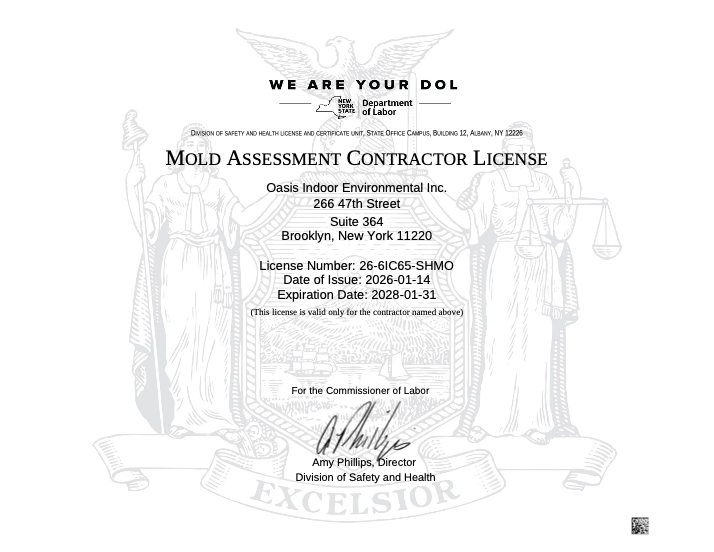
New York State law prohibits the same company from performing both lead assessment and lead remediation on the same property. That separation exists for a reason: an inspector with a financial stake in finding problems — or in clearing work their own crews performed — is not a neutral party. Oasis Indoor Environmental is an inspection-only firm. We have no remediation division, no contractor referral fees, and no incentive to produce any finding other than an accurate one. When our report says a property is compliant, that finding is clean.
That independence also matters when a report is scrutinized. HPD reviewers and attorneys on both sides of a lead dispute look at who produced the inspection and whether that party had any interest in the outcome. A report from an inspection-only firm with nearly 20 years of NYC compliance work carries weight that a report from a remediation contractor's in-house inspector does not.
Local Law 31 Compliance — Common Questions
What is the deadline for Local Law 31 inspections in my borough?
LL31 deadlines are staggered by borough and building. The citywide inspection cycle runs through 2025, with specific deadlines assigned based on building location and prior compliance history. If you are unsure of your building's deadline, contact us — we can help you determine where you stand before HPD does.What happens if I miss my Local Law 31 deadline?
Missing an LL31 deadline exposes property owners to HPD violations, civil penalties, and potential inclusion on the city's list of non-compliant buildings. Fines can compound over time, and a violation on record can complicate property sales, refinancing, and insurance. Early inspection is significantly less expensive than enforcement.Do I need a new inspection if I already had one done before Local Law 31?
Prior lead inspections do not automatically satisfy LL31 requirements. The law specifies inspection standards, documentation formats, and technology requirements (XRF) that older assessments may not meet. If your prior inspection predates the LL31 cycle or was not conducted by an EPA-certified inspector using XRF technology, a new inspection is almost certainly required.Does Local Law 31 apply to buildings built after 1960?
The primary LL31 threshold is pre-1960 construction for multi-unit residential buildings. However, pre-1978 buildings of any size where a child under six resides are also subject to lead paint inspection requirements under related NYC law. If your building falls in the 1960–1978 range and houses young children, you should not assume you are exempt.