
Asbestos Inspection and Testing in NYC
Any building constructed before 1980 may contain asbestos-containing materials — in floor tiles, pipe insulation, ceiling texture, joint compound, roofing felt, and more. Disturbing those materials without knowing what you have is a serious health and legal risk. Oasis Indoor Environmental provides certified asbestos inspection and sampling so you have documented, defensible answers before any renovation or demolition work begins.
Why Asbestos Testing Matters Before You Renovate
Asbestos fibers become dangerous when disturbed. Sanding, cutting, or demolishing materials that contain asbestos releases microscopic fibers into the air — fibers that lodge in lung tissue and are linked to mesothelioma, asbestosis, and lung cancer. In New York, asbestos regulations require that suspect materials be identified and assessed before any renovation or demolition project that could disturb them. Skipping that step doesn't just put workers and occupants at risk — it exposes property owners to significant regulatory liability.
The older the building, the higher the probability. NYC's housing stock is among the oldest in the country, and asbestos was used extensively in construction materials manufactured before 1981. If your building predates that era and you're planning any work that touches walls, floors, ceilings, mechanical systems, or roofing, a pre-renovation asbestos survey is the right first step.
What an Asbestos Inspection Includes
Our asbestos inspection process is systematic and documentation-driven. Every engagement produces a written report that identifies suspect materials, describes their condition, and provides laboratory-confirmed results — the standard required for regulatory compliance and contractor clearance.
Where Asbestos Is Commonly Found in Older Buildings
Asbestos was incorporated into dozens of building materials because of its heat resistance, tensile strength, and low cost. In older NYC buildings, the most common locations include:
- Floor tiles and the adhesive beneath them (9"×9" vinyl floor tiles are a well-known indicator)
- Pipe and boiler insulation, including wrap on steam and hot water lines
- Textured ceiling coatings and acoustic ceiling tiles (popcorn ceilings)
- Joint compound and spackling used on drywall and plaster seams
- Roofing materials, including felt underlayment and shingles
- Exterior siding (certain fiber-cement and transite products)
- Duct insulation and HVAC system components
- Plaster and stucco in pre-war construction
Many of these materials are not visually distinguishable from non-asbestos alternatives. The only way to know is laboratory analysis of a collected bulk sample.
Pre-Renovation Asbestos Survey
Before any renovation or demolition project, a pre-renovation survey identifies all suspect asbestos-containing materials in the work area. We conduct a thorough visual assessment of the scope of work, collect bulk samples from suspect materials, and submit them to an accredited laboratory for analysis. The resulting report tells contractors exactly what they're working with — and gives property owners the documentation they need to proceed legally and safely.
Bulk Asbestos Sampling
When a specific material raises concern — a damaged floor tile, deteriorating pipe wrap, or disturbed ceiling texture — targeted bulk sampling provides a fast, definitive answer. We collect samples using proper containment protocols to avoid fiber release during the process, and results are returned from an accredited lab typically within a few business days. Standard and rush turnaround options are available depending on project timelines.
Asbestos Condition Assessment
Not all asbestos-containing materials require immediate removal. Whether a material is friable (easily crumbled and likely to release fibers) or non-friable and in good condition affects the regulatory obligation and the appropriate response. Our condition assessment documents the current state of identified materials, classifies them by risk level, and provides written guidance on whether abatement, encapsulation, or ongoing monitoring is the appropriate course — giving you the full picture before any contractor conversation begins.
Commercial and Multi-Family Asbestos Inspections
Larger properties — apartment buildings, commercial offices, schools, and industrial facilities — often require more comprehensive asbestos surveys covering multiple building systems and material categories. We work with property managers, building engineers, and owners' representatives to scope surveys appropriately, coordinate access across units or floors, and produce reports that meet the documentation standards required by NYC DEP and OSHA for regulated projects.
Certified Inspectors, Accredited Laboratory Results
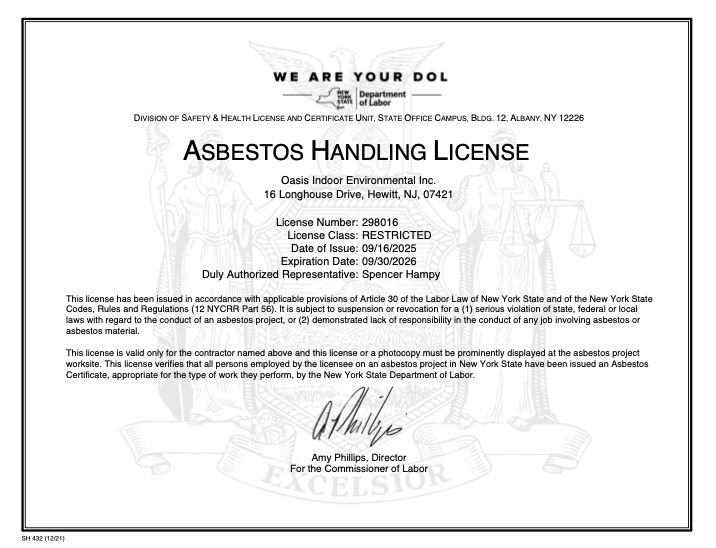
Every asbestos inspection Oasis conducts is performed by trained, certified inspectors with nearly 20 years of experience in the NY metro area. Bulk samples are submitted to accredited third-party laboratories for polarized light microscopy (PLM) analysis — the standard method for identifying asbestos fiber type and concentration in building materials. Reports are written to a documentation standard that holds up in regulatory review, contractor disputes, and legal proceedings. You receive not just a result, but a record.
Our inspectors carry credentials across multiple environmental disciplines — including EPA lead certification, NYS mold assessor licensure, and CIEC and CMC designations — which means asbestos inspections are often coordinated alongside mold, lead, or indoor air quality assessments when a property requires multiple evaluations at once.
Frequently Asked Questions About Asbestos Inspection
Do I need an asbestos test before renovating an older home or apartment?
In New York, any renovation or demolition project that may disturb suspect materials in a pre-1981 building should be preceded by an asbestos survey. For regulated projects — those meeting certain size thresholds under NYC DEP rules — a survey is legally required before work begins. Even for smaller projects outside that threshold, testing before renovation is the responsible standard: it protects workers, occupants, and the property owner from liability if asbestos is disturbed unknowingly.Where is asbestos most commonly found in NYC buildings?
The most frequent locations in older NYC construction include floor tiles and their adhesive backing, pipe and boiler insulation, textured or acoustic ceiling coatings, joint compound on drywall and plaster seams, and roofing materials. Pre-war buildings may also contain asbestos in plaster and stucco. Because many of these materials look identical to non-asbestos alternatives, visual identification alone is not reliable — laboratory analysis of a collected sample is the only definitive method.What happens if asbestos is found during the inspection?
Finding asbestos in a building material does not automatically mean it must be removed. The appropriate response depends on the material's condition and whether planned work will disturb it. Non-friable materials in good condition that will not be touched during a renovation may be managed in place with ongoing monitoring. Friable materials, or any material that will be disturbed, typically require licensed abatement before work proceeds. Our report documents the findings and provides clear guidance on the options — the decision about how to proceed belongs to you, not us.How long does an asbestos inspection take, and when will I get results?
The on-site portion of a residential asbestos inspection typically takes one to two hours depending on the scope of the survey and the number of suspect materials sampled. Laboratory analysis of bulk samples generally returns results within three to five business days under standard turnaround. Rush processing is available when project schedules require faster results. The final written report is delivered once laboratory results are confirmed.