
Fall Indoor Air Quality for Offices: What Employers Should Know Before Everyone Returns
As summer schedules wrap up and autumn arrives, office buildings across New York and New Jersey see a significant jump in occupancy. While higher headcount brings collaborative energy back to the...

As summer schedules wrap up and autumn arrives, office buildings across New York and New Jersey see a significant jump in occupancy. While higher headcount brings collaborative energy back to the workplace, it also places extra strain on commercial HVAC systems. With windows shut against the crisp autumn air and more people sharing the space, ventilation often drops. Now is the ideal time for employers and facility managers to look closely at their indoor air quality (IAQ).
Common IAQ Issues in Commercial Spaces
When hundreds of employees return to an office, the indoor environment changes rapidly. Poor airflow can allow everyday irritants to accumulate, leading to afternoon fatigue, headaches, and allergy-like symptoms among your team.
Some of the most frequent workplace air quality challenges include:
- Elevated Carbon Dioxide (CO2): As occupancy climbs, stale air can cause CO2 levels to spike, making employees feel sluggish or unfocused.
- Dust and Particulates: Office equipment, foot traffic, and nearby construction projects kick up fine dust particles that circulate through the building.
- Volatile Organic Compounds (VOCs): Cleaning supplies, freshly painted walls, commercial carpets, and office furniture can release chemical emissions into the air.
- Odor Intrusion: Smells from ground-floor restaurants, neighboring businesses, or exhaust from attached parking garages can easily migrate into office spaces.
Why Commercial IAQ Requires a Different Focus
In residential homes, hidden moisture and mold are frequently the main culprits behind indoor environmental complaints. While moisture control remains important in commercial properties, mold is usually less of a daily trigger for office workers unless there is a specific plumbing leak or roof failure.
Instead, general indoor air quality challenges dominate commercial environments. Because modern office buildings are sealed tightly for energy efficiency, indoor pollutants can easily reach levels much higher than those found outdoors. Addressing airflow, chemical off-gassing, and everyday particulate filtration is essential for workplace wellness.
Our Holistic Approach to Workplace Air Quality
At Oasis Indoor Environmental, we look at your commercial building as a complete system. Our team takes a holistic approach to indoor environmental quality, inspecting everything from ventilation effectiveness to persistent mystery odors.
During an office investigation, we perform thorough checks of CO2 levels, relative humidity, dust concentrations, and chemical contaminants. As a strictly inspection-only firm, our testing results are always unbiased and objective. Our goal is to help you understand exactly what is in your building's air and provide cost-effective recommendations to resolve any issues.
Supporting Compliance and Employee Comfort
A healthy workplace is good for morale and vital for business continuity. Clean, well-ventilated air keeps employees comfortable, reduces sick days, and improves overall productivity. For property owners and commercial landlords across the New York City metro area, professional IAQ testing also provides clear, third-party documentation. Having defensible environmental data helps you meet regulatory standards and reassure tenants that their workspaces are safe and well-maintained.
Prepare Your Office for the Fall Season
Before your full team settles in for the autumn months, make sure your building is ready to support them. We invite you to explore our new website to learn more about our commercial indoor air quality testing services. Contact Oasis Indoor Environmental today to schedule an independent workplace assessment.
About the Author
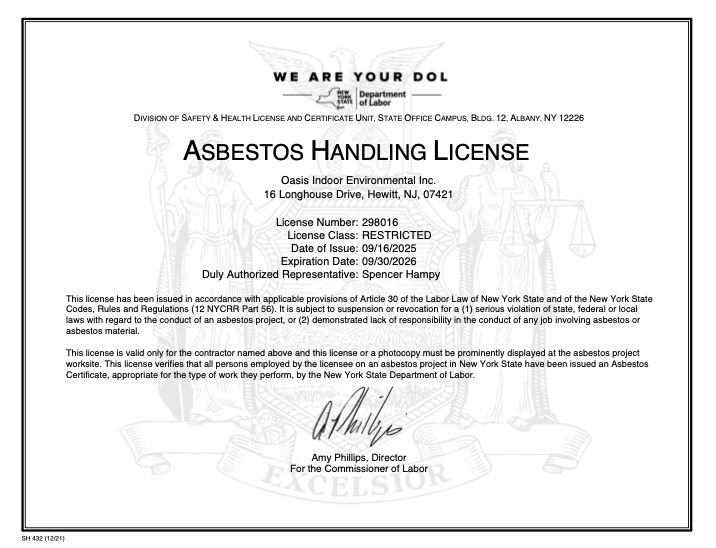
Spencer Hampy established Oasis Indoor Environmental, Inc. with the purpose of creating and maintaining healthy indoor environments in residential and commercial properties throughout the Greater New York City Area. What began as mold testing quickly expanded to include inspections and testing for every type of indoor air quality concern. We love a mystery!